 English
 Spanish
 French
 German
 Italian
 Chinese (Simplified)
 Japanese
 Korean
 Arabic
 Portuguese
Call us now
08045476963

 Send Inquiry
Mono Ethylene Glycol Liquid
Price 60 INR/ Unit
Mono Ethylene Glycol Liquid Specification
- Application
- Antifreeze solutions, polyester fibers, coolant, solvents, chemical intermediate
- Ph Level
- 6-8 (at 20°C, 20% solution)
- Feature
- High purity, excellent hygroscopic properties, miscible with water
- HS Code
- 29053100
- Purity
- 99% min
- Usage
- Used in inks, adhesives, chemical synthesis, automotive coolants
- Poisonous
- Yes, if ingested
- Structural Formula
- HOCH2CH2OH
- Grade
- Industrial grade
- Molecular Weight
- 62.07 g/mol
- Appearance
- Clear, colorless, viscous liquid
- Melting Point
- -12.9°C
- CAS No
- 107-21-1
- EINECS No
- 203-473-3
- Boiling point
- 197.3°C
- Molecular Formula
- C2H6O2
- Chemical Name
- Mono Ethylene Glycol
- Color
- Colorless
- Type
- Industrial Chemical
- Other Names
- Ethylene Glycol, MEG
- Water Content
- Max 0.1%
- Smell
- Odorless
- Physical Form
- Liquid
- Refractive Index (20C)
- 1.4318
- Hazard Statement
- Harmful if swallowed. Avoid direct contact.
- Vapor Pressure at 20C
- 0.06 mmHg
- Auto-Ignition Temperature
- 410 C
- Packaging
- Bulk tankers, drums, IBCs
- Solubility
- Completely miscible with water, alcohol, acetone
- Storage Condition
- Store in tightly closed, cool, and dry containers
- Viscosity at 20C
- 21 cP
- Density at 20C
- 1.113-1.115 g/cm3
- Shelf Life
- 24 months from manufacturing date (unopened)
- Flash Point
- 111.1 C (closed cup)
Mono Ethylene Glycol Liquid Trade Information
- Minimum Order Quantity
- 500 Kilograms
- Payment Terms
- Letter of Credit (L/C), Western Union, Paypal, Cash in Advance (CID), Cash Advance (CA)
- Supply Ability
- 10 Kilograms Per Week
- Delivery Time
- 7 Days
- Sample Available
- Yes
- Sample Policy
- Sample costs shipping and taxes has to be paid by the buyer
- Main Export Market(s)
- Australia, North America, Eastern Europe, Central America, Middle East, South America, Western Europe, Asia, Africa
- Main Domestic Market
- All India
About Mono Ethylene Glycol Liquid
Mono Ethylene Glycol
Mono Ethylene Glycol offered is also known by the chemical names of 1,2-ethanediol; Glycol; Ethane-1,2-diol; Monoethylene glycol; 1,2-Dihydroxyethane and others with molecular formula of C2H6O2 and molecular weight of 62.06784 g/mol. Made available in colorless, odorless, viscous dihydroxy alcohol, it comes with sweet taste and is an important glycol which is commercially available and finds use as antifreeze and coolant and in hydraulic fluids. Other than this, it also finds use in production of low-freezing dynamites and resins, as a solvent.
Specification
| State of Matter | Liquid |
| Usage/Application | Industrial |
| Purity (%) | 99 |
| Melting Point (deg. Celsius) | (12.9) |
| Density (g/Cm Cube) | 1.11 |
| Form | Liquid |
| Boiling Point (deg. Celsius) | 197.3 |
| Molecular Formula | C2H6O2 |
| CAS Number | 107-21-1 |
| Grade Standard | Technical Grade |
Exceptional Purity and Industrial Utility
Mono Ethylene Glycol boasts a 99% minimum purity, making it ideal for industrial applications that demand high quality and consistency. Its excellent water miscibility and stable viscosity make it a preferred base for coolant and antifreeze formulations, as well as a vital chemical intermediate in numerous manufacturing processes.
Storage, Handling, and Safety
Storage of MEG requires tightly closed containers in cool, dry environments to maintain its stability and long shelf life. Although it is odorless and colorless, care should be taken to avoid direct contact and ingestion, as it is harmful if swallowed. Provided in robust packaging such as drums, IBCs, and bulk tankers, it is handled safely across the supply chain.
Versatile Applications and Benefits
This compounds combination of high purity, low volatility, and strong solvency enables its widespread usefrom automotive coolants and heat transfer fluids to raw material for polyester fibers, inks, and adhesives. MEGs excellent hygroscopic properties boost efficiency and performance in industrial systems, benefiting end-users with reliability and cost-effectiveness.
FAQs of Mono Ethylene Glycol Liquid:
Q: How is Mono Ethylene Glycol typically used across industries?
A: Mono Ethylene Glycol is used as an essential raw material in the production of polyester fibers and resins. It also serves as a key ingredient in antifreeze and coolant formulations, inks, adhesives, solvents, and chemical synthesis processes within automotive, textile, and manufacturing sectors.Q: What storage conditions are recommended for Mono Ethylene Glycol liquid?
A: To ensure stability and longevity, Mono Ethylene Glycol should be stored in tightly closed, cool, and dry containers. Direct sunlight and high temperatures should be avoided to maintain product purity and prevent hazards.Q: When handling MEG, what safety precautions are necessary?
A: Protective gloves and eye protection are recommended when handling Mono Ethylene Glycol, as it is harmful if swallowed and may cause irritation upon direct contact. Work in well-ventilated areas and avoid ingestion, inhalation, or prolonged skin exposure.Q: Where can Mono Ethylene Glycol be sourced in India?
A: Mono Ethylene Glycol can be obtained through trusted exporters, importers, and suppliers across India. It is typically available in bulk tankers, drums, and intermediate bulk containers (IBCs) suitable for industrial-scale distribution.Q: What are the benefits of using Mono Ethylene Glycol in antifreeze and coolant applications?
A: Its high purity and excellent water miscibility enable reliable performance in temperature regulation, preventing freezing and overheating in automotive engines and industrial systems, thereby extending equipment lifespan and efficiency.Q: How does the physical property of viscosity affect the application of this chemical?
A: The viscosity of Mono Ethylene Glycol (21 cP at 20C) allows for easy flow and integration in fluid systems such as coolants and antifreeze, ensuring uniform mixing and effective heat transfer during operation.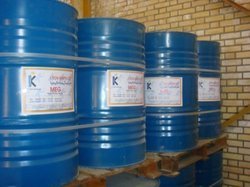

Price:
- 50
- 100
- 200
- 250
- 500
- 1000+

More Products in Construction Chemicals Category
Phenol Crystal
Price 27500 INR
Minimum Order Quantity : 1 Dram
CAS No : 108952
Grade : Industrial Grade
Molecular Weight : 94.11 g/mol
Melting Point : 4043 C

Allyl Alcohol
Price 180 INR
Minimum Order Quantity : 25 Kilograms
CAS No : 107186
Grade : Industrial grade
Molecular Weight : 58.08 g/mol
Melting Point : 129 C
Diethylamine Chemical
Price 150 INR
Minimum Order Quantity : 25 Kilograms
CAS No : 109897
Grade : Industrial Grade
Molecular Weight : 73.14 g/mol
Melting Point : 50C
Dicyclohexylamine Chemical
Price 66000 INR
Minimum Order Quantity : 1 Dram
CAS No : 101837
Grade : Industrial/Technical
Molecular Weight : 181.32 g/mol
Melting Point : 0.6C


 Send Inquiry
 Send Inquiry
 Send SMS
 Call Me Free
Developed and Managed by Infocom Network Private Limited.

