 English
 Spanish
 French
 German
 Italian
 Chinese (Simplified)
 Japanese
 Korean
 Arabic
 Portuguese
Call us now
08045476963

 Send Inquiry
Diethyl Ether
Diethyl Ether Specification
- Structural Formula
- (C2H5)2O
- Purity
- 99.0% minimum
- HS Code
- 29091100
- Taste
- Sweet-ish
- Application
- Solvent, anesthesia, extraction, chemical synthesis
- Storage
- Store in cool, well-ventilated place, away from open flames and oxidizers
- Usage
- As solvent in laboratories and industry, anesthesia (historically), extraction
- Solubility
- Slightly soluble in water; miscible with alcohol, chloroform and most organic solvents
- Shelf Life
- 24 months in tightly sealed containers
- Refractive Rate
- 1.353
- Shape
- Liquid
- Ingredients
- Diethyl Ether
- Molecular Weight
- 74.12 g/mol
- Molecular Formula
- C4H10O
- CAS No
- 60-29-7
- Grade
- Laboratory, Analytical, Industrial
- Appearance
- Clear, colorless
- EINECS No
- 200-467-2
- Product Type
- Chemical
- Smell
- Characteristic, ether-like
- Melting Point
- -116°C
- Poisonous
- Yes, harmful if inhaled or ingested
- Properties
- Flammable, volatile, colorless
- Physical Form
- Liquid
- Density
- 0.713 Gram per cubic centimeter(g/cm3)
- Ph Level
- Neutral
- Boiling Point
- 34.6C
- Precautionary Statements
- P210: Keep away from heat/sparks/open flames/hot surfaces. P243: Take precautionary measures against static discharge.
- Packaging Type
- Sealed Glass or Metal Containers
- Stabilizer
- Contains inhibitor (BHT) to prevent peroxide formation
- Flash Point
- -45C (closed cup)
- Vapor Pressure
- 442 mmHg (20C)
- Autoignition Temperature
- 160C
- Hazard Class
- 3 (Flammable liquids)
- EC Number
- 200-467-2
- UN Number
- UN1155
- Hazard Statements
- H224: Extremely flammable liquid and vapor. H304: May be fatal if swallowed and enters airways.
Diethyl Ether Trade Information
- Minimum Order Quantity
- 1 Dram
- Payment Terms
- Cash Advance (CA), Letter of Credit (L/C), Western Union, Paypal, Cash in Advance (CID)
- Supply Ability
- 10 Drams Per Week
- Delivery Time
- 7 Days
- Sample Available
- Yes
- Sample Policy
- Sample costs shipping and taxes has to be paid by the buyer
- Main Export Market(s)
- Western Europe, Australia, Eastern Europe, Middle East, Central America, South America, Asia, North America, Africa
- Main Domestic Market
- All India
About Diethyl Ether
Diethyl Ether
Diethyl ether, also known as ethoxyethane, ethyl ether, sulfuric ether, or simply ether, is an organic compound in the ether class with the formula (C2H5)2O. It is a colorless, highly volatile flammable liquid. It is commonly used as a solvent and was once used as a general anesthetic. It has narcotic properties and has been known to cause temporary DSM-IV dependence, the only symptom of which is the will to do more, sometimes referred to as etheromania.
It is particularly important as a solvent in the production of cellulose plastics such as cellulose acetate.
Specification
| Colourless | Transperant |
| Usage | Solvent in Laboratories |
| Packaging Type | Can, Drum |
| Grade Standard | Laboratory |
| Packaging Size | 150 |
| Color | Clolourless |
Exceptional Solvent Properties
Diethyl Ether is renowned for its effectiveness as a solvent in both laboratory and industrial applications. It readily dissolves a wide array of organic compounds and is miscible with alcohol, chloroform, and many other solvents. Its volatile nature allows for easy removal from reaction mixtures, making it a popular choice in extractions and syntheses.
Safety and Handling Precautions
Given its extremely flammable properties and low flash point, Diethyl Ether must be handled with strict precautions. It should be kept away from heat, sparks, open flames, and stored in tightly sealed, well-ventilated containers. The addition of BHT inhibitor minimizes the risk of dangerous peroxide formation during storage.
FAQs of Diethyl Ether:
Q: How should Diethyl Ether be safely stored to prevent accidents?
A: Diethyl Ether should be stored in sealed glass or metal containers placed in a cool, well-ventilated area, away from open flames, heat sources, and oxidizing agents. Ensure that storage areas are equipped to mitigate static discharge and that the product remains tightly sealed to prevent evaporation and contamination.Q: What are the main uses and benefits of Diethyl Ether in industrial and laboratory settings?
A: Diethyl Ether is widely used as a solvent due to its ability to dissolve a broad spectrum of organic compounds, making it invaluable for chemical synthesis, extraction processes, and chromatography. Its high volatility allows for lightweight removal post-reaction, and it was historically employed as an anesthetic agent.Q: When is Diethyl Ether considered hazardous and what precautions should be taken during handling?
A: Diethyl Ether is extremely flammable (hazard statements: H224, H304) and can be harmful if inhaled or ingested. Use appropriate personal protective equipment, handle only in well-ventilated areas, avoid all ignition sources, and follow prescribed safety measures against static electricity as indicated by precautionary statements P210 and P243.Q: Where should Diethyl Ether be used or applied to maximize safety and performance?
A: Use Diethyl Ether exclusively in controlled environments such as laboratories or industrial settings equipped with sufficient ventilation and safety provisions. Never use it near open flames, hot surfaces, or areas where sparking may occur, to minimize risks associated with its high flammability.Q: What is the process for using Diethyl Ether as a solvent or extraction agent?
A: When using Diethyl Ether for extraction or as a solvent, add it to the mixture under controlled, ventilated conditions. After the desired process, remove the ether by evaporation or distillation, ensuring all vapors are safely contained and vented. Dispose of all residues following proper hazardous waste protocols.Q: How does the BHT inhibitor benefit the storage and stability of Diethyl Ether?
A: BHT (butylated hydroxytoluene) serves as a stabilizer in Diethyl Ether, significantly reducing the risk of peroxide formation, a dangerous by-product that can develop over time. This addition extends the ethers shelf life and improves safety during long-term storage and transport.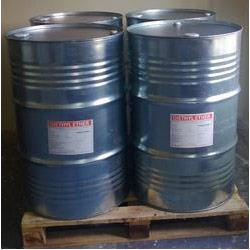

Price:
- 50
- 100
- 200
- 250
- 500
- 1000+

More Products in Organic Chemicals Category
Methyl Acetoacetate
Price 115 INR
Minimum Order Quantity : 25 Kilograms
Shape : other, Liquid
Molecular Weight : 116.12 g/mol
Ingredients : Methyl Acetoacetate
CAS No : 105453
Amino Ethyl Ethanolamine
Price 9250 INR
Minimum Order Quantity : 10 Barrels
Shape : other, Liquid form
Molecular Weight : 104.15 g/mol
Ingredients : Aminoethyl Ethanolamine
CAS No : 111411
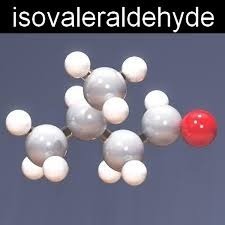
Isovaleraldehyde
Price 325 INR
Minimum Order Quantity : 25 Kilograms
Shape : other, Amorphous (liquid form)
Molecular Weight : 86.13 g/mol
Ingredients : Isovaleraldehyde (main active ingredient)
CAS No : 590863

Isopropyl Ether
Price 150 INR
Minimum Order Quantity : 25 Kilograms
Shape : other, Liquid form
Molecular Weight : 102.17 g/mol
Ingredients : Isopropyl ether
CAS No : 108203


 Send Inquiry
 Send Inquiry
 Send SMS
Developed and Managed by Infocom Network Private Limited.

