 English
 Spanish
 French
 German
 Italian
 Chinese (Simplified)
 Japanese
 Korean
 Arabic
 Portuguese
Call us now
08045476963

 Send Inquiry
Methane Sulfonyl Chloride
Methane Sulfonyl Chloride Specification
- Particle Size
- Not applicable (liquid)
- Storage
- Keep container tightly closed in a dry and well-ventilated place. Store under inert gas.
- Acid Value
- Not determined
- Heavy Metal (%)
- 0.001%
- HS Code
- 29041090
- Moisture (%)
- 0.2%
- Residue on Ignition
- 0.1%
- Place of Origin
- India
- Viscosity
- Not determined
- Loss on Drying
- 0.5%
- EINECS No
- 204-708-2
- Assay
- 99% Min
- Ph Level
- Not applicable (non-aqueous)
- Boiling point
- 161-163 C
- Molecular Weight
- 114.55 g/mol
- Molecular Formula
- CH3SO2Cl
- Melting Point
- -32 C
- Other Names
- Methanesulfonyl chloride, Methylsulfonyl chloride, Mesyl chloride
- CAS No
- 124-63-0
- Type
- Chemical Intermediate
- Grade
- Industrial Grade
- Usage
- Pharmaceutical Intermediates, Agrochemical Synthesis, Dye & Pigment Production
- Purity
- 99% Min
- Appearance
- Colorless to pale yellow liquid
- Application
- Pharmaceuticals, Agrochemicals, Dyes, and Organic Synthesis
- Raw Material
- Methane, Sulfuryl Chloride
- Smell
- Pungent
- Color
- Clear to pale yellow
- Form
- Liquid
- UN Number
- 3246
- Density (at 20C)
- 1.480 - 1.490 g/mL
- Hazard Class
- 8 (Corrosive)
- Solubility
- Decomposes in water, soluble in organic solvents such as chloroform and ether
- Flash Point
- 70 C (closed cup)
- Refractive Index (n20/D)
- 1.428 - 1.430
- Stability
- Stable under recommended storage conditions
Methane Sulfonyl Chloride Trade Information
- Minimum Order Quantity
- 1 Dram
- Payment Terms
- Letter of Credit (L/C), Western Union, Paypal, Cash in Advance (CID), Cash Advance (CA)
- Supply Ability
- 20 Drams Per Week
- Delivery Time
- 7 Days
- Sample Available
- Yes
- Sample Policy
- Sample costs shipping and taxes has to be paid by the buyer
- Main Export Market(s)
- Western Europe, Middle East, Central America, South America, Australia, Asia, Eastern Europe, North America, Africa
- Main Domestic Market
- All India
About Methane Sulfonyl Chloride
We are recognized in the industry for offering a optimum quality Methane Sulfonyl Chloride. The offered range is processed using supreme class ingredients and the latest processing methodology under the guidance of trained chemical experts at vendors end. To ensure quality and purity, our offered range is rigorously tested on various quality parameters. Highly demanded across various labs and chemical industries, our offered range can be availed by our clients in attractive packaging options.
The main use of methanesulfonyl chloride is the formation of methanesulfonates from alco in the presence of a non-nucleophilic base. Methanesulfonates are used as intermediates in substitution reactions, elimination reactions, reductions, and rearrangement reactions. When treated with a Lewis acid, oxime methanesulfonates will undergo a facile Beckmann rearrangement.
Methanesulfonates have been occasionally used as a protecting group for alco. It is stable to acidic conditions and is cleaved back to the alco using sodium amalgam.
Specification
|
Density |
1.48 g/cm3 |
|
Usage |
Industrial |
|
Physical State |
Liquid |
|
Packaging Type |
DRUM |
|
Molar Mass |
114.56 g/mol |
Versatile Chemical Intermediate
Methane Sulfonyl Chloride is predominantly used as a chemical intermediate. Its high level of purity and convenient liquid form make it ideal for a range of industrial applications. From medicines to agrochemicals and dye production, its essential for facilitating complex organic syntheses and functional group modifications.
Handling and Safety Precautions
Classified as a corrosive substance (Hazard Class 8, UN 3246), Methane Sulfonyl Chloride must be handled with care. Containers should remain tightly sealed and stored in dry, well-ventilated places under inert gas to ensure stability. Personal protective equipment is necessary to avoid contact due to its pungent smell and corrosive nature.
Stable Storage and Transport
Methane Sulfonyl Chloride remains stable under recommended storage conditions. It should be kept away from moisture, as it decomposes in water. Its flash point is 70C (closed cup), making temperature control important during transportation, storage, and usage to maintain product integrity.
FAQs of Methane Sulfonyl Chloride:
Q: How should Methane Sulfonyl Chloride be stored safely?
A: Methane Sulfonyl Chloride should be kept in tightly closed containers, stored in a dry and well-ventilated area under inert gas to preserve its stability. Contact with moisture or water must be avoided, as the compound decomposes upon exposure.Q: What are the main industrial applications of Methane Sulfonyl Chloride?
A: Methane Sulfonyl Chloride serves as a chemical intermediate in the synthesis of pharmaceuticals, agrochemicals, dyes, and pigments. Its widely utilized for functional group transformations in organic synthesis.Q: When is Methane Sulfonyl Chloride typically used in manufacturing processes?
A: It is used when high reactivity and purity are required, particularly during intermediate steps of pharmaceutical or agrochemical synthesis. Its reliable performance makes it suitable for processes demanding efficient functionalization.Q: Where does Methane Sulfonyl Chloride originate from?
A: This chemical is manufactured and exported from India, utilizing raw materials like methane and sulfuryl chloride. It is supplied and distributed globally to various industries.Q: What benefits does Methane Sulfonyl Chloride offer in organic synthesis?
A: Its high purity, reactivity, and stability under recommended conditions make it beneficial for efficient, precise reactions, improving yield and selectivity during production of pharmaceuticals, agrochemicals, and dyes.Q: Is Methane Sulfonyl Chloride soluble in water?
A: No, Methane Sulfonyl Chloride decomposes in water. It is, however, soluble in organic solvents such as chloroform and ether, making it versatile in non-aqueous syntheses.Q: How is Methane Sulfonyl Chloride transported considering its hazard class?
A: As a corrosive substance (Hazard Class 8, UN 3246), it is transported in specialized containers following strict regulations to ensure safe handling and to prevent exposure or decomposition due to moisture.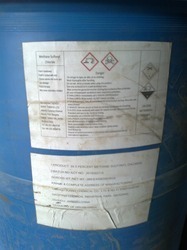

Price:
- 50
- 100
- 200
- 250
- 500
- 1000+

More Products in Pharmaceutical Chemicals Category
Iso Propyl Ether
Price 20250 INR / Dram
Minimum Order Quantity : 1 ,
Form : Liquid
Type : Other, Ether Solvent
CAS No : 108203
Purity : 99% min
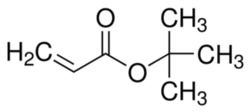
Butyl Acrylate
Price 500 INR
Minimum Order Quantity : 25
Form : Liquid
Type : Other, Industrial Chemical
CAS No : 141322
Purity : 99.0%
Triethylene Triamine
Price 325 INR
Minimum Order Quantity : 25 Kilograms
Form : Liquid
Type : Other, Chemical Intermediate
CAS No : 112243
Purity : 98%
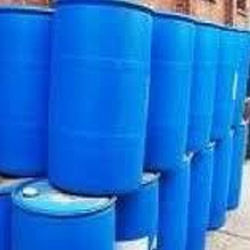
Liquid Dimethylacetamide
Price 20000 INR
Minimum Order Quantity : 1 Dram
Form : Liquid
Type : Other, Industrial Solvent
CAS No : 127195
Purity : >=99.5%


 Send Inquiry
 Send Inquiry
 Send SMS
 Call Me Free
Developed and Managed by Infocom Network Private Limited.

