 English
 Spanish
 French
 German
 Italian
 Chinese (Simplified)
 Japanese
 Korean
 Arabic
 Portuguese
Call us now
08045476963

 Send Inquiry
Ethyl Chloroformate
Ethyl Chloroformate Specification
- Assay
- >= 98%
- Heavy Metal (%)
- 0.001%
- HS Code
- 29159090
- Moisture (%)
- 0.1%
- Residue on Ignition
- 0.5%
- Particle Size
- Not applicable (liquid)
- Boiling point
- 94-96C
- EINECS No
- 208-760-7
- Storage
- Store in a cool, dry, well-ventilated area, away from heat and ignition sources
- Melting Point
- -80C
- Molecular Formula
- C3H5ClO2
- Place of Origin
- India
- Loss on Drying
- 0.5%
- Molecular Weight
- 108.52 g/mol
- Ph Level
- Not applicable (typically used in non-aqueous conditions)
- Viscosity
- Not determined
- Other Names
- Ethyl carbonochloridate; Chloroformic acid ethyl ester
- CAS No
- 541-41-3
- Type
- Chemical Compound
- Grade
- Industrial grade
- Usage
- Intermediate for pharmaceuticals, agrochemicals, dyes, and organic synthesis
- Purity
- 98.0%
- Appearance
- Clear liquid
- Application
- Organic Synthesis, Pharma Intermediate, Agrochemical Intermediate
- Raw Material
- Ethanol, Phosgene
- Smell
- Pungent, penetrating odor
- Color
- Colorless to pale yellow
- Form
- Liquid
- Refractive Index (nD 20C)
- 1.405 - 1.409
- Solubility
- Decomposes in water; soluble in alcohol, ether, and benzene
- Transportation Information
- UN 1182, Hazard Class 6.1 (Toxic), Packing Group II
- Density
- 1.13 g/cm3 at 20C
- Flash Point
- 12C (closed cup)
- Stability
- Unstable in the presence of moisture, reacts with water to produce ethanol, CO2, and HCl
- Handling Precautions
- Do not breathe vapors; wear suitable protective clothing, gloves, and eye protection
- Packaging
- HDPE drums, 25 kg / 200 kg net per drum
- Expiry
- 2 years from date of manufacture (in unopened packaging)
Ethyl Chloroformate Trade Information
- Minimum Order Quantity
- 1 Dram
- Payment Terms
- Letter of Credit (L/C), Western Union, Paypal, Cash in Advance (CID), Cash Advance (CA)
- Supply Ability
- 10 Drams Per Week
- Delivery Time
- 7 Days
- Sample Available
- Yes
- Sample Policy
- Sample costs shipping and taxes has to be paid by the buyer
- Main Export Market(s)
- Western Europe, Asia, Australia, North America, Eastern Europe, Africa, Middle East, South America, Central America
- Main Domestic Market
- All India
About Ethyl Chloroformate
Ethyl Chloroformate
Ethyl chloroformate
CAS #: 541-41-3
Uses: Ethyl chloroformate is used as a reactive chemical intermediate in plastic, pharmaceutical, agricultural and ore flotation chemical manufacturing.
Product Specifications:
* Product: Ethyl chloroformate, 99%
General Product Data:
* Version: 3
- * CAS No: 541-41-3
- * Molecular weight: 108.52
- * Molecular formula: C3 H5 Cl O2
- * Linear formula: ClCO2C2H5
- * Flash point (C): 10
- Appearance: clear liquid
- Color scale: =<50 APHA
- Infrared spectrometry: authentic
- Separat. techn. GC: >=98.5 %, =<0.3 % (ethanol), =<1.0 % (diethyl carbonate)
- Refractive index: 1.3940 to 1.3960 (20C, 589 nm)
- Free acid (HCl): =<0.1 %
"This particular price varies on daily basis.please call and check for the latest price."
Key Properties and Chemical Characteristics
Ethyl Chloroformate possesses a density of 1.13 g/cm at 20C and a refractive index (nD 20C) ranging from 1.405 to 1.409. Its flash point is relatively low at 12C, and it exhibits high reactivity with water, decomposing to produce ethanol, CO, and HCl. The compound is colorless to pale yellow and is characterized by its penetrating odor. It should be stored in a cool, dry environment away from heat and moisture.
Applications and Usage Benefits
This chemical compound serves as a vital intermediate in the synthesis of pharmaceuticals, agrochemicals, and dyes, and is often employed in the production of specialized organic compounds. Its excellent reactivity streamlines complex synthetic processes, making it an essential raw material for industrial applications that demand high-purity intermediates.
Safe Handling, Packaging, and Storage Guidelines
Ethyl Chloroformate must be handled with caution: avoid inhalation of vapors, and always use appropriate protective clothing, gloves, and eye protection. The product is supplied in robust HDPE drums (25 kg or 200 kg), and should be stored in tightly sealed containers, away from sources of heat, ignition, or moisture, to ensure stability and safety during transportation and storage.
FAQs of Ethyl Chloroformate:
Q: How should Ethyl Chloroformate be stored for maximum stability?
A: Ethyl Chloroformate should be stored in a cool, dry, and well-ventilated area, in tightly closed HDPE drums. It must be kept away from sources of heat, ignition, and moisture to prevent decomposition and maintain its chemical integrity.Q: What are the primary uses and benefits of Ethyl Chloroformate in industry?
A: This compound is mainly used as an intermediate in the production of pharmaceuticals, agrochemicals, and dyes. Its high reactivity enhances the efficiency of organic synthesis processes, making it valuable for creating high-purity specialty chemicals.Q: When is Ethyl Chloroformate considered expired and how long does it remain usable?
A: Ethyl Chloroformate remains stable and effective for up to 2 years from the date of manufacture, provided the packaging remains unopened and storage conditions are optimal. Use beyond this period is not recommended as stability may decline.Q: Where is Ethyl Chloroformate commonly exported from and what is its typical packaging?
A: This chemical is widely exported from India and is typically packaged in high-density polyethylene (HDPE) drums, available in 25 kg or 200 kg net weight per drum to ensure safe handling and transport.Q: What handling precautions are necessary when working with Ethyl Chloroformate?
A: Proper safety measures include wearing suitable protective clothing, gloves, and eye protection, and avoiding the inhalation of vapors. The compound should only be handled in well-ventilated areas to minimize exposure risks.Q: How does Ethyl Chloroformate react with water, and what are the hazards involved?
A: Upon contact with water, Ethyl Chloroformate decomposes, releasing ethanol, carbon dioxide, and hydrogen chloride gas. This reaction can be hazardous as it produces toxic and corrosive byproducts which can cause harm if proper precautions are not taken.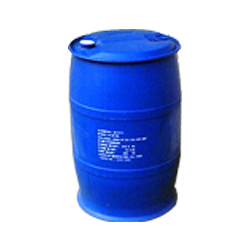

Price:
- 50
- 100
- 200
- 250
- 500
- 1000+

More Products in Pharma Chemicals Category
Para Toluene Sulfonic Acid
Price 75 INR
Minimum Order Quantity : 25 Kilograms
Grade : Other, Reagent Grade / Industrial Grade
Form : Solid
Place of Origin : India
Purity : 99% Min
Liquid DMF Solvent
Price 15400 INR / Dram
Minimum Order Quantity : 1 Dram
Grade : Other, Industrial Grade
Form : Liquid
Place of Origin : India
Purity : 99.9%
1 Bromo 3 Chloropropane
Price 56100 INR
Minimum Order Quantity : 1 Dram
Grade : Other, Industrial Grade
Form : Liquid
Place of Origin : India
Purity : 98%
Butyl Acetate
Price 77 INR
Minimum Order Quantity : 25 Kilograms
Grade : Medicine Grade
Form : Liquid
Place of Origin : India
Purity : 99%


 Send Inquiry
 Send Inquiry
 Send SMS
Developed and Managed by Infocom Network Private Limited.

