 English
 Spanish
 French
 German
 Italian
 Chinese (Simplified)
 Japanese
 Korean
 Arabic
 Portuguese
Call us now
08045476963

 Send Inquiry
Glutaraldehyde
Glutaraldehyde Specification
- Ingredients
- Glutaraldehyde solution (typically 50% aqueous)
- Molecular Formula
- C5H8O2
- CAS No
- 111-30-8
- Refractive Rate
- 1.404 (at 20C, for 50% solution)
- Structural Formula
- OHC-(CH2)3-CHO
- Ph Level
- Typically 3.1 4.5 (for 50% solution)
- Taste
- Acrid, pungent (Not for human consumption)
- Smell
- Sharp, pungent odor
- Application
- Disinfectant, sterilant, fixative in microscopy and histology, tanning agent, water treatment, leather processing
- Shape
- Liquid
- Density
- 1.06 Gram per cubic centimeter(g/cm3)
- Physical Form
- Liquid
- Purity
- 50% (typical, other purities available)
- Shelf Life
- 1 year (when properly stored)
- Storage
- Store in tightly closed container, cool, well-ventilated area, away from sunlight and sources of ignition
- Product Type
- Organic Chemical
- Appearance
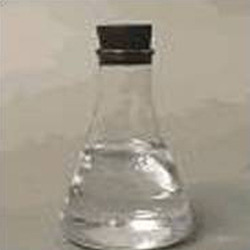
- Clear, colorless to pale yellow liquid
- Poisonous
- Yes, toxic if ingested or inhaled
- Properties
- Broad-spectrum biocidal activity, effective sterilizing agent, non-corrosive to metal instruments, activated in alkaline conditions
- Melting Point
- -14 C
- HS Code
- 29121900
- Usage
- Surface disinfectant, cold sterilization of medical instruments, tissue fixative, industrial water treatment
- EINECS No
- 203-856-5
- Solubility
- Miscible with water
- Molecular Weight
- 100.12 g/mol
- Grade
- Industrial Grade / Laboratory Grade / Technical Grade
- Biodegradability
- Readily biodegradable
- Hazard Class
- 8 (Corrosive)
- Packing Group
- II
- Transport Information
- Sea, air, road under Class 8 regulations
- Flash Point
- >97C (closed cup for 50% solution)
- Environmental Hazard
- Toxic to aquatic life with long lasting effects
- Boiling Point
- 187 C
- Vapor Pressure
- 0.38 mm Hg (20C for 50% solution)
- Stability
- Stable under recommended storage conditions; sensitive to light and oxidizers
- UN Number
- UN 2922
- pKa
- Approx. 13 (for aqueous solution)
Glutaraldehyde Trade Information
- Minimum Order Quantity
- 1 Dram
- Payment Terms
- Letter of Credit (L/C), Western Union, Paypal, Cash in Advance (CID), Cash Advance (CA)
- Supply Ability
- 10 Drams Per Week
- Delivery Time
- 7 Days
- Sample Available
- Yes
- Sample Policy
- Sample costs shipping and taxes has to be paid by the buyer
- Main Export Market(s)
- Western Europe, Australia, Middle East, South America, Asia, Central America, Eastern Europe, North America, Africa
- Main Domestic Market
- All India
About Glutaraldehyde
Glutaraldehyde
We offer Glutaraldehyde Disinfectant is a colourless liquid with a pungent odor used to sterilize medical and dental equipment. It is also used for industrial water treatment and as a chemical preservative.. Glutaraldehyde is an oily liquid at room temperature (density 1.06 g/mL), and miscible with water, alcohol, and benzene. Glutaraldehyde is frequently used in biochemistry applications as an amine-reactive homobifunctional crosslinker. Moreover, we also provide these chemicals as per clients mentioned specifications.
Application Areas
-
Disinfectant Chemical
Water Treatment Chemical
Pharmaceutical Chemical
- Biocides
"This particular price varies on daily basis. Please call and check for the latest price"
Specification
| Solubility | Slightly soluble in water |
| Purity % | 85% |
| CAS Number | 111-30-8 |
| Chemical Formula | C5H8O2 |
| Packaging Details | 50-100Kg Drum |
| Synonyms | Glutaraldehyde, Pentanedial, Glutaral |
Versatile Disinfection and Sterilization
Glutaraldehyde serves as a powerful disinfectant and sterilizing agent commonly utilized in hospitals, laboratories, and industrial settings. Its effectiveness against a wide range of microorganisms makes it ideal for cold sterilization of medical instruments and as a surface disinfectant. Additionally, it plays a crucial role as a fixative in microscopy, preserving cellular structures for research and diagnostic purposes.
Safe Storage and Handling
Proper storage is essential for glutaraldehyde due to its sensitivity to light and oxidizing agents. The chemical should be kept in tightly closed containers in a cool, well-ventilated area, away from sunlight and ignition sources. Adhering to these storage guidelines helps maintain its stability and maximizes its one-year shelf life, ensuring user safety and product efficacy.
Environment and Transport Considerations
Though glutaraldehyde is readily biodegradable, it poses a significant hazard to aquatic life and should be handled with environmental precautions. Its transport is regulated under UN 2922 (Class 8, Packing Group II) via sea, air, and road. These regulations ensure safe and compliant shipping, reflecting the substances corrosive and toxic attributes.
FAQs of Glutaraldehyde:
Q: How should glutaraldehyde be safely stored to maintain stability?
A: Glutaraldehyde should be stored in tightly closed containers within a cool, well-ventilated area, away from direct sunlight and sources of ignition. It is sensitive to light and oxidizers, and proper storage under these conditions helps maintain its stability and effectiveness for up to a year.Q: What are the main uses of glutaraldehyde in industrial and laboratory settings?
A: Glutaraldehyde is primarily used as a disinfectant, sterilant for medical instruments (cold sterilization), fixative in microscopy and histology, tanning agent in leather processing, and for industrial water treatment. Its broad-spectrum biocidal properties and non-corrosive effects on metals make it highly versatile.Q: When is glutaraldehyde considered most effective as a biocidal agent?
A: Glutaraldehyde exhibits its most effective biocidal activity in alkaline conditions. Typically, a 50% solution is used for disinfecting surfaces and equipment, ensuring optimal activity against a broad range of microorganisms.Q: Where can glutaraldehyde be safely applied or used?
A: Glutaraldehyde can be applied on surfaces in medical, laboratory, and industrial environments, for cold sterilization of metal instruments, water treatment systems, as well as in tissue fixation for microscopic examination. It should always be used in well-ventilated areas to avoid inhalation exposures.Q: What is the process for handling glutaraldehyde waste and exposure?
A: Glutaraldehyde waste should be disposed of according to local environmental regulations, taking precautions to prevent its release into water sources due to its toxicity to aquatic life. In case of accidental contact or inhalation, seek medical attention immediately and ensure proper ventilation in the workspace.Q: What benefits does glutaraldehyde offer compared to other sterilizing agents?
A: Glutaraldehyde is highly effective at low concentrations, non-corrosive to metal instruments, and acts rapidly as a sterilant. Its broad-spectrum antimicrobial activity, combined with its compatibility with metals and readily biodegradable nature, distinguishes it from many other chemical sterilants.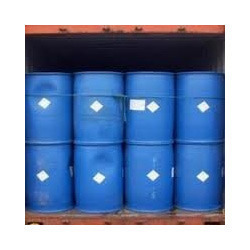

Price:
- 50
- 100
- 200
- 250
- 500
- 1000+

More Products in Organic Chemicals Category
Morpholine Liquid 99.5%
Price 170 INR / Dram
Minimum Order Quantity : 1 Dram
Grade : Industrial / Technical Grade
Storage : Other, Store in tightly closed containers, in a cool, dry, wellventilated area away from sources of ignition.
Application : Other , Rubber accelerator, corrosion inhibitor, pharmaceutical intermediate, solvent, chemical synthesis.
Physical Form : Liquid
Methyl Acetoacetate
Price 115 INR
Minimum Order Quantity : 25 Kilograms
Grade : Industrial
Storage : Other, Store in a cool, dry, wellventilated area away from direct sunlight
Application : Other , Pharmaceuticals, agrochemicals, dyestuffs, and flavoring agents
Physical Form : Liquid
Diethyl Ether
Price 28750 INR
Minimum Order Quantity : 1 Dram
Grade : Laboratory, Analytical, Industrial
Storage : Other, Store in cool, wellventilated place, away from open flames and oxidizers
Application : Other , Solvent, anesthesia, extraction, chemical synthesis
Physical Form : Liquid
Methyl Chloroformate
Price 140 INR
Minimum Order Quantity : 25 Grams
Grade : Reagent/Technical
Storage : Other, Store in cool, dry, wellventilated area, away from moisture
Application : Other , Intermediate in organic synthesis, pharmaceuticals, pesticides
Physical Form : Liquid


 Send Inquiry
 Send Inquiry
 Send SMS
Developed and Managed by Infocom Network Private Limited.

