 English
 Spanish
 French
 German
 Italian
 Chinese (Simplified)
 Japanese
 Korean
 Arabic
 Portuguese
Call us now
08045476963

 Send Inquiry
DMF
DMF Specification
- Residue on Ignition
- 0.001%
- Storage
- Store in a cool, dry, well-ventilated place, keep container tightly closed
- Ph Level
- Neutral
- Melting Point
- -61°C
- Viscosity
- 0.92 mPa·s (at 25°C)
- Place of Origin
- India
- EINECS No
- 200-679-5
- Boiling point
- 153°C
- HS Code
- 29241900
- Moisture (%)
- 0.01%
- Molecular Formula
- C3H7NO
- Heavy Metal (%)
- <0.0001
- Assay
- >= 99.90%
- Molecular Weight
- 73.09 g/mol
- Other Names
- Dimethylformamide, DMF
- CAS No
- 68-12-2
- Type
- Organic Solvent
- Grade
- Industrial Grade
- Usage
- Industrial
- Purity
- 99.9%
- Appearance
- Clear Liquid
- Application
- Pharmaceuticals, Agrochemicals, Polymer and Film Production
- Raw Material
- Methanol, Carbon Monoxide, Dimethylamine
- Smell
- Ammonia-like Odor
- Color
- Colorless
- Form
- Liquid
- UN Number
- UN 2265
- Density
- 0.944 g/cm3 at 20C
- Water Solubility
- Miscible
- Refractive Index
- 1.4305 at 20C
- Stability
- Stable under recommended storage conditions
- Toxicity
- Harmful if inhaled, swallowed or absorbed through skin
- Shelf Life
- 2 Years
- Evaporation Rate
- 0.47 (butyl acetate=1)
- Autoignition Temperature
- 445C
- Flash Point
- 58C (Closed cup)
DMF Trade Information
- Minimum Order Quantity
- 25 Kilograms
- Payment Terms
- Cash Advance (CA), Letter of Credit (L/C), Western Union, Paypal, Cash in Advance (CID)
- Supply Ability
- 500 Kilograms Per Week
- Delivery Time
- 7 Days
- Sample Available
- Yes
- Sample Policy
- Sample costs shipping and taxes has to be paid by the buyer
- Main Export Market(s)
- Western Europe, Australia, North America, Eastern Europe, Middle East, South America, Asia, Central America, Africa
- Main Domestic Market
- All India
About DMF
DMF
Being a quality centric company, we are presenting an outstanding quality of Dimethylformamide. Our client can purchase this propane with different packaging options only at suitable rates.Features & Uses:
- Highly effective
- Quick and fast results
- Purity
- It is used as a reagent in the Bouveault aldehyde synthesis and in the Vilsmeier-Haack reaction, another useful method of forming aldehydes.
- It is also a common catalyst used in the synthesis of acyl halides, in particular the synthesis of acyl chlorides from carboxylic acids using oxalyl or thionyl chloride. The catalytic mechanism entails reversible formation of an imidoyl chloride.
Specification
| Density | 944 kg/m3 |
| Physical State | Liquid |
| Usage | Industrial,Commerical |
| Grade Standard | Technical Grade |
Versatile Industrial Solvent
Dimethylformamide (DMF) serves as a vital raw material in pharmaceuticals, agrochemicals, and the production of polymers and films. With its high purity (99.9%) and neutral pH, it is engineered for stability and reliable performance across diverse manufacturing settings. DMFs complete water miscibility and clear, ammonia-like odor demonstrate its unique properties as a solvent in challenging chemical processes.
Safe Storage and Handling
For optimal safety and longevity, DMF should be stored in a cool, dry, well-ventilated environment. The container must be sealed tightly to prevent moisture ingress and limit exposure to air or ignition sources, as its flash point is 58C. Stable for up to two years, adherence to recommended storage conditions is essential to maintain DMFs chemical integrity and minimize health risks associated with its usage.
Specification and Compliance
DMF is produced under stringent industrial standards, with a molecular formula of C3H7NO and a molecular weight of 73.09 g/mol. Assured by strict QC processes, impurities like heavy metals are kept below 0.0001%. Its compliance is demonstrated by CAS No. 68-12-2 and EINECS No. 200-679-5, and it is exported globally from India with HS Code 29241900.
FAQs of DMF:
Q: How should Dimethylformamide (DMF) be stored to ensure maximum shelf life?
A: DMF must be stored in a cool, dry, and well-ventilated area, with its container tightly closed to prevent exposure to moisture and air. This ensures stability and extends its shelf life to up to two years.Q: What is DMF commonly used for in industrial applications?
A: DMF is primarily utilized in the manufacture of pharmaceuticals, agrochemicals, polymers, and films due to its excellent solvent properties and high purity level (99.9%).Q: When is DMF considered hazardous and what precautions must be taken during handling?
A: DMF is harmful if inhaled, swallowed, or absorbed through skin. Proper ventilation, protective equipment, and careful handling are required to minimize health risks, especially because of its ammonia-like odor and toxic nature.Q: Where is DMF manufactured and exported from?
A: DMF offered is manufactured in India and exported globally. It complies with international standards, verified by its HS Code 29241900 and other regulatory identifiers.Q: What benefits does DMF provide over other solvents for industrial processes?
A: DMFs complete miscibility with water, high purity, stability, and broad utility across industries make it advantageous for processes requiring precise solvation and minimal contaminants.Q: How is DMF produced and what raw materials are involved?
A: DMF is synthesized using methanol, carbon monoxide, and dimethylamine as key raw materials, ensuring a consistently pure final product suitable for sensitive industrial applications.Q: What is the process for safely disposing or handling DMF in case of a spill?
A: In the event of a DMF spill, ventilate the area and wear appropriate protective gear. Absorb with inert material and dispose of according to local environmental regulations, considering its toxicity and flammability characteristics.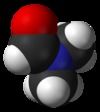

Price:
- 50
- 100
- 200
- 250
- 500
- 1000+

More Products in Pharma Chemicals Category

Methylene Di Chloride - MDC
Price 47 INR
Minimum Order Quantity : 25 Kilograms
Grade : Other, Industrial / Technical Grade
Purity : 99.9%
Storage : Other, Store in a cool, dry, wellventilated area away from direct sunlight and incompatible substances
Form : Liquid

Bisphenol A
Price 100 INR
Minimum Order Quantity : 25 Kilograms
Grade : Other, Industrial Grade
Purity : 99% min
Storage : Other, Keep container tightly closed in a cool, dry, wellventilated place
Form : Solid
Liquid Toluene
Price 12000 INR
Minimum Order Quantity : 1 Dram
Grade : Other, Industrial Grade
Purity : 99.9% min
Storage : Other, Store in tightly closed containers in a cool, dry, wellventilated area away from sources of ignition
Form : Liquid

Acetonitrile
Price 160 INR
Minimum Order Quantity : 25
Grade : Other, HPLC, Analytical, Industrial
Purity : 99.9%
Storage : Other, Keep tightly closed, Store in a cool and dry place
Form : Liquid


 Send Inquiry
 Send Inquiry
 Send SMS
Developed and Managed by Infocom Network Private Limited.

