 English
 Spanish
 French
 German
 Italian
 Chinese (Simplified)
 Japanese
 Korean
 Arabic
 Portuguese
Call us now
08045476963

 Send Inquiry
Dimethyl Carbonate
Dimethyl Carbonate Specification
- Moisture (%)
- 0.01%
- Ph Level
- Neutral
- Viscosity
- 0.585 mPas (at 25C)
- Molecular Weight
- 90.08 g/mol
- Storage
- Store in cool, dry place
- Loss on Drying
- 0.05%
- Place of Origin
- China
- HS Code
- 29209020
- EINECS No
- 210-478-4
- Molecular Formula
- C3H6O3
- Heavy Metal (%)
- 0.0001%
- Melting Point
- 2-4C
- Particle Size
- Not Applicable (liquid)
- Acid Value
- 0.01 mg KOH/g
- Assay
- 99.9%
- Residue on Ignition
- 0.001%
- Boiling point
- 90C
- Other Names
- DMC, Carbonic acid dimethyl ester
- CAS No
- 616-38-6
- Type
- Chemical Intermediate
- Grade
- Industrial Grade
- Usage
- Pharmaceuticals, Solvents, Polycarbonate Production
- Purity
- 99.9%
- Appearance
- Clear Liquid
- Application
- Electrolyte solvents, Methylating agent, Polycarbonate synthesis
- Raw Material
- Methanol, Carbon Monoxide
- Smell
- Faint, pleasant
- Color
- Colorless
- Form
- Liquid
- Density
- 1.069 g/cm3 (20C)
- Flash Point
- 18C (Closed cup)
- Vapor Pressure
- 3.2 kPa (20C)
- Stability
- Stable under recommended storage conditions
- Refractive Index
- 1.368 (20C)
- Auto Ignition Temperature
- 458C
- Solubility
- Miscible with organic solvents, slightly soluble in water
Dimethyl Carbonate Trade Information
- Minimum Order Quantity
- 1 Dram
- Payment Terms
- Letter of Credit (L/C), Paypal, Western Union, Cash in Advance (CID), Cash Advance (CA)
- Supply Ability
- 10 Drams Per Week
- Delivery Time
- 7 Days
- Sample Available
- Yes
- Sample Policy
- Sample costs shipping and taxes has to be paid by the buyer
- Main Export Market(s)
- Eastern Europe, Central America, Middle East, South America, Western Europe, Australia, Asia, North America, Africa
- Main Domestic Market
- All India
About Dimethyl Carbonate
Dimethyl Carbonate
Dimethyl carbonate (DMC) is an organic compound with the formula OC(OCH3)2. It is a colourless, flammable liquid. It is classified as a carbonate ester. This compound has found use as a methylating agent and more recently as a solvent that is exempt from classification as a volatile organic compound (VOC) in the US. Dimethyl carbonate is often considered to be a green reagent.
Specification
| Density | 1.07 g/cm3 |
| Usage | Industrial |
| Physical State | Liquid |
| Grade Standard | Technical Grade |
High Purity and Versatility
Dimethyl Carbonate (DMC) offers a remarkable 99.9% purity, making it suitable for demanding industrial applications. Its versatility allows its use as a chemical intermediate for pharmaceuticals, as a solvent, and in polycarbonate synthesis. Its miscibility with organic solvents and neutral pH underscore its adaptability across several chemical processes.
Safe Handling and Storage Guidelines
DMC is a liquid with a low flash point, requiring cool, dry storage to ensure safety and stability. It remains stable under recommended conditions, with an auto-ignition temperature of 458C. Appropriate handling methods, such as closed containers and proper ventilation, help maintain its quality and minimize risks.
Environmental and Process Benefits
As a methylating agent and electrolyte solvent, DMC presents environmental advantages over traditional reagents due to its low toxicity and high efficiency. Its role in polycarbonate manufacturing also supports sustainable material development, delivering clean performance and minimal byproducts.
FAQs of Dimethyl Carbonate:
Q: How should Dimethyl Carbonate be stored to maintain its stability?
A: Dimethyl Carbonate should be stored in a cool, dry place away from ignition sources. Use tightly sealed containers to prevent moisture ingress, as the compound remains stable under recommended storage conditions.Q: What are the main industrial applications of Dimethyl Carbonate?
A: DMC is primarily used as a chemical intermediate in pharmaceuticals, a solvent, and in the synthesis of polycarbonates. Additional applications include use as a methylating agent and electrolyte solvent.Q: When is Dimethyl Carbonate most beneficial in chemical processes?
A: Dimethyl Carbonate is most beneficial when high purity and low toxicity are required, such as in pharmaceutical manufacturing, advanced materials synthesis, and eco-friendly solvent applications.Q: Where is Dimethyl Carbonate sourced and supplied from?
A: This chemical is commonly exported, imported, and supplied by manufacturers in China, with Indian companies acting as exporters, importers, and suppliers for industrial use.Q: What safety precautions should be taken during handling and use of Dimethyl Carbonate?
A: Due to its low flash point and vapor pressure, ensure the working area is well-ventilated, avoid heat sources, and wear suitable protective equipment such as gloves and goggles.Q: How does the use of Dimethyl Carbonate benefit polycarbonate production?
A: In polycarbonate synthesis, DMC enables efficient, high-yield production with fewer hazardous byproducts, contributing to more sustainable and safer manufacturing processes.Q: Can Dimethyl Carbonate be mixed with water and other solvents for formulation purposes?
A: DMC is miscible with most organic solvents but only slightly soluble in water. For optimal formulation, it is best combined with organic media rather than aqueous solutions.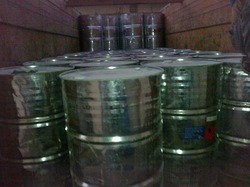

Price:
- 50
- 100
- 200
- 250
- 500
- 1000+

More Products in Pharma Chemicals Category
Alpha Naphthol
Price 190 INR
Minimum Order Quantity : 25 Kilograms
Grade : Other, Reagent/Technical
Purity : 99% Min
Storage : Other, Store in a cool, dry, and wellventilated area, away from incompatible substances
Place of Origin : India
Methylene Dichloride (MDC)
Price 47 INR
Minimum Order Quantity : 25 Grams
Grade : Other, Technical/Industrial Grade
Purity : 99.9%
Storage : Other, Store in tightly closed containers, in a cool, dry, and wellventilated area
Place of Origin : India
1 Bromo 3 Chloropropane
Price 56100 INR
Minimum Order Quantity : 1 Dram
Grade : Other, Industrial Grade
Purity : 98%
Storage : Other, Store in cool, dry, and wellventilated place. Keep away from heat and sources of ignition.
Place of Origin : India
Ethyl Acetate
Price 65 INR
Minimum Order Quantity : 25 Kilograms
Grade : Tech Grade
Purity : 99%
Storage : Room Temperature
Place of Origin : India


 Send Inquiry
 Send Inquiry
 Send SMS
 Call Me Free
Developed and Managed by Infocom Network Private Limited.

