 English
 Spanish
 French
 German
 Italian
 Chinese (Simplified)
 Japanese
 Korean
 Arabic
 Portuguese
Call us now
08045476963

 Send Inquiry
Morpholine Chemical
Morpholine Chemical Specification
- Storage
- Store in a cool, dry, and well-ventilated area, away from sources of ignition and incompatible substances
- Density
- 0.999 Gram per cubic centimeter(g/cm3)
- Ingredients
- Morpholine (C4H9NO)
- Refractive Rate
- 1.454 at 20C
- Purity
- 99% Min.
- Poisonous
- Yes, toxic if ingested or inhaled
- Usage
- Chemical intermediate, solvent, corrosion inhibitor, rubber accelerator
- Solubility
- Miscible with water, soluble in ethanol, ether, benzene
- Physical Form
- Liquid
- Ph Level
- Approx. 11 (alkaline)
- Grade
- Industrial Grade
- CAS No
- 110-91-8
- Shelf Life
- 2 years in unopened containers under proper storage conditions
- Shape
- Liquid Form
- Appearance
- Clear colorless liquid
- Melting Point
- 4 C (25 F)
- Molecular Formula
- C4H9NO
- Properties
- Colorless, hygroscopic, slightly viscous, has amine-like odor, miscible in water and many organic solvents.
- Structural Formula
- C4H9NO (heterocyclic amine ring)
- Smell
- Amine-like pungent odor
- EINECS No
- 203-815-1
- Product Type
- Organic Chemical
- HS Code
- 29349900
- Application
- Used in pharmaceuticals, rubber chemicals, corrosion inhibitors, optical brighteners, and as a solvent
- Molecular Weight
- 87.12 g/mol
- Flash Point
- 35C (closed cup)
- UN Number
- 2054
- Vapor Pressure
- 13.1 mmHg at 20C
- EC Number
- 203-815-1
- Hazard Class
- 8 (Corrosive)
- Boiling Point
- 128-130C
- Packaging Type
- HDPE Drums, IBC Tanks
- Autoignition Temperature
- 310C
- Stability
- Stable under recommended storage conditions
- Decomposition Products
- Nitrogen oxides, carbon oxides on combustion
- Compatibility
- Incompatible with strong oxidizers, acids
Morpholine Chemical Trade Information
- Minimum Order Quantity
- 25 Kilograms
- Payment Terms
- Letter of Credit (L/C), Western Union, Paypal, Cash in Advance (CID), Cash Advance (CA)
- Supply Ability
- 500 Kilograms Per Week
- Delivery Time
- 7 Days
- Sample Available
- Yes
- Sample Policy
- Sample costs shipping and taxes has to be paid by the buyer
- Main Export Market(s)
- Australia, South America, Western Europe, Middle East, Central America, Asia, Eastern Europe, North America, Africa
- Main Domestic Market
- All India
About Morpholine Chemical
Morpholine
Facilitated by superior machinery and current technology, we are offering a qualitative assortment of Morpholine Chemical to our clients. This morpholine is formulated by using the quality proven chemical compounds & chemical reactions. Our offered morpholine is examined on quality factors under the direction of quality specialist. Moreover, this morpholine is provided in different packaging options & reasonable rates.
Features:
- Precise PH value
- Highly effective
- Longer shelf life
Benefits:
- Prevents stress cracking corrosion
- Does not add TDS
- Reduces blow down
Specification
| Density | 1.01 g/cm3 |
| Physical State | Liquid |
| Usage | Industrial,Personal |
| Grade Standard | Technical Grade,Analytical Grade |
Key Chemical Properties
Morpholine is recognized for its colorless and slightly viscous liquid form with an amine-like, pungent odor. It boasts a high purity level of 99% and is miscible with water, ethanol, ether, and benzene, making it adaptable for various chemical processes. With a melting point of 4C and a stable pH of approximately 11, it is considered alkaline and must be managed with suitable safety protocols.
Applications Across Industries
This chemical is widely utilized in pharmaceuticals, rubber accelerators, corrosion inhibitors, optical brighteners, and as an intermediate or solvent in specialty chemicals. Its ability to dissolve in multiple solvents, paired with its reactive amine structure, contributes to its value in industrial production, formulation, and refining operations.
Safe Handling and Storage
Morpholine should be stored in a cool, dry, and well-ventilated location, isolated from strong oxidizers and acids to preserve stability and avoid hazardous decomposition. It remains stable for up to two years when kept in unopened containers under recommended conditions. HDPE drums and IBC tanks are preferred packaging methods to ensure both safety and product integrity during transport and storage.
FAQs of Morpholine Chemical:
Q: What is the recommended process for storing Morpholine chemical safely?
A: Morpholine should be stored in a cool, dry, and well-ventilated area, away from sources of ignition, incompatible substances such as strong oxidizers and acids, and direct sunlight. Use tightly sealed HDPE drums or IBC tanks to prevent moisture ingress and maintain product integrity.Q: How is Morpholine commonly used in industrial applications?
A: Morpholine functions as a chemical intermediate, solvent, corrosion inhibitor, rubber accelerator, and is vital in the synthesis of pharmaceuticals, rubber chemicals, optical brighteners, and specialty chemicals due to its chemical reactivity and solubility properties.Q: What should be considered when handling Morpholine to ensure safety?
A: Given Morpholines corrosive and toxic nature, personnel should use appropriate personal protective equipment, including gloves, safety goggles, and protective clothing. Ensure good ventilation during handling, and avoid inhalation or ingestion to reduce health risks.Q: Where is Morpholine exported from and how is it packaged?
A: Morpholine is exported, imported, and supplied mainly from India, packaged in high-density polyethylene (HDPE) drums and intermediate bulk containers (IBC tanks) to guarantee safe transportation and storage while limiting chemical exposure risks.Q: When does Morpholine reach its shelf life under proper storage conditions?
A: Morpholine has a shelf life of up to two years when stored in unopened containers under appropriate conditions, such as controlled temperature and humidity, as outlined by standard chemical safety guidelines.Q: What are the benefits of using Morpholine in chemical processes?
A: Morpholines excellent solubility, stable structure, and high purity make it highly adaptable for formulations in pharmaceuticals, corrosion inhibiting systems, and rubber manufacturing, helping enhance process efficiencies and product quality.Q: What decomposition products can result from Morpholine combustion?
A: Upon combustion or decomposition, Morpholine may release nitrogen oxides and carbon oxides, necessitating strict management of fire risks and the use of proper containment equipment during chemical handling and disposal.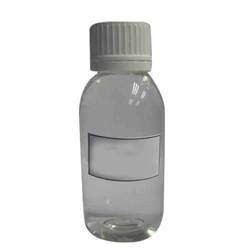

Price:
- 50
- 100
- 200
- 250
- 500
- 1000+

More Products in Coatings Chemicals Category
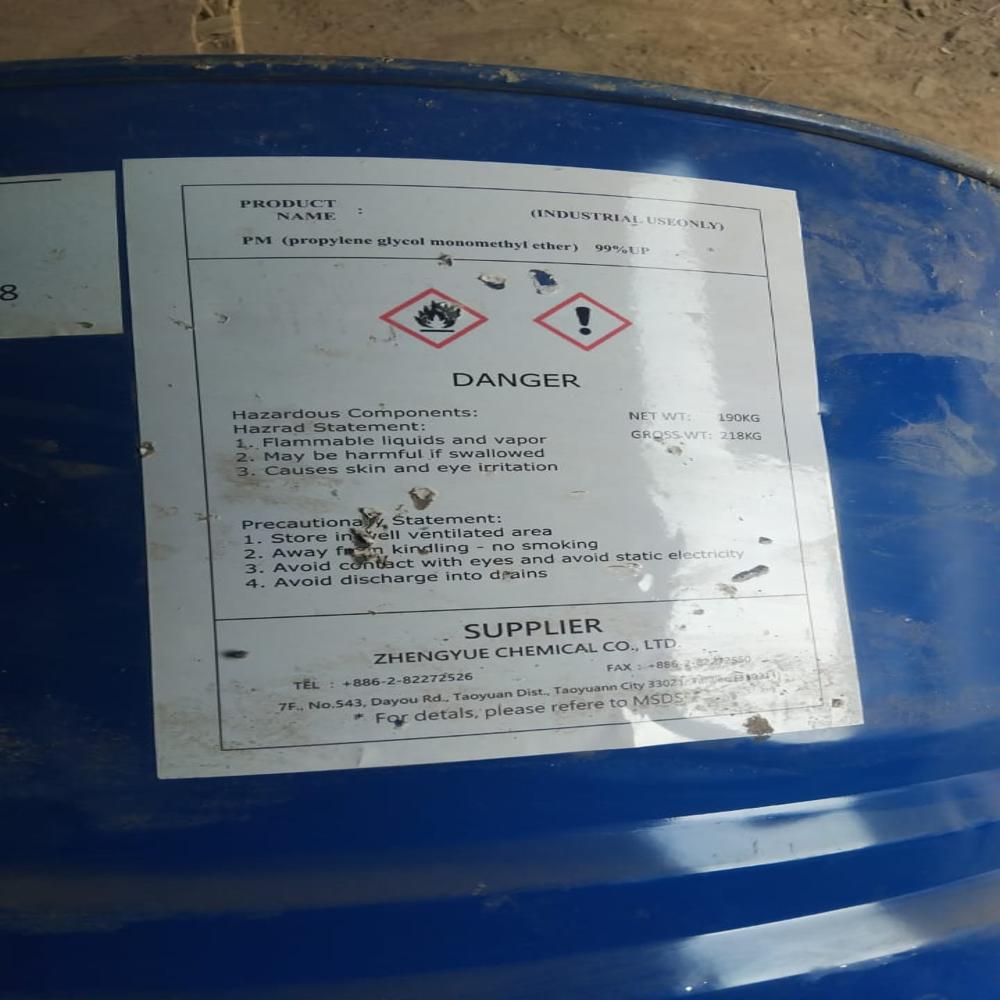
Propylene Glycol Monomethyl Ether
Price 200.0 INR
Minimum Order Quantity : 200 Kilograms
CAS No : 107982
Properties : Propylene glycol methyl ether (PGME or 1methoxy2propanol) is an organic solvent with a wide variety of industrial and commercial uses. Similar to other glycol ethers, it is used as a carrier/solvent in printing/writing inks and paints/coatings. It also finds use as an industrial and commercial paint stripper. It is used as an antifreeze in diesel engines. Key Properties & Uses Coatings and Inks: Used as a solvent to dissolve resins, pigments, dyes, and waxes. It helps paints and inks achieve smooth flow and leveling. Electronics: Highly effective for removing flux and residue from sensitive circuit components. Safety & Hazards: Classified as a flammable liquid. Shortterm exposure in high concentrations may cause eye, skin, and respiratory irritation. It biodegrades rapidly, exhibiting relatively low mammalian and aquatic toxicity.
Density : 0.92 Gram per cubic meter (g/m3)
Molecular Formula : C4H10O2
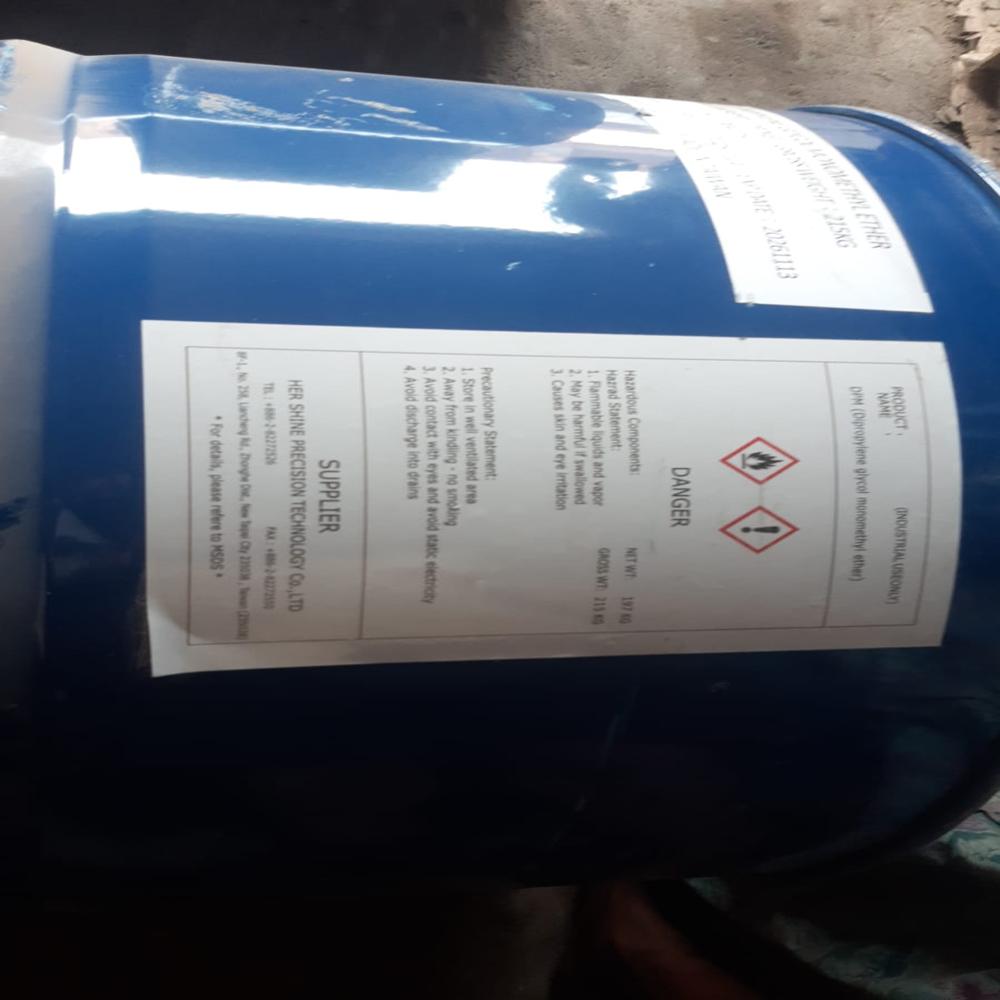
Dipropylene Glycol Monomethyl Ether
Price 285.0 INR
Minimum Order Quantity : 197 Kilograms
CAS No : 34590948
Properties : Dipropylene glycol monomethyl ether (DPM) is a clear, colorless liquid with a slight ether odor. DPM is completely soluble in water and has moderate volatility.1 Dow manufactures and sells DPM under the trade name DOWANOLTM DPM Glycol Ether.DPM is used as a solvent, coupling agent, and coalescing agent. It is often formulated into latex coatings, water reducible coatings, and cleaners. DPM is also used as a chemical building block in the manufacture of other products. Some specific applications are household and industrial cleaners, grease and paint removers, metal cleaners, hard surface cleaners, printing ink solvents, fabric dye coupling agents, cosmetics, and herbicide stabilizers.
Density : 0.951 Gram per cubic meter (g/m3)
Molecular Formula : C7H16O3


 Send Inquiry
 Send Inquiry
 Send SMS
Developed and Managed by Infocom Network Private Limited.

